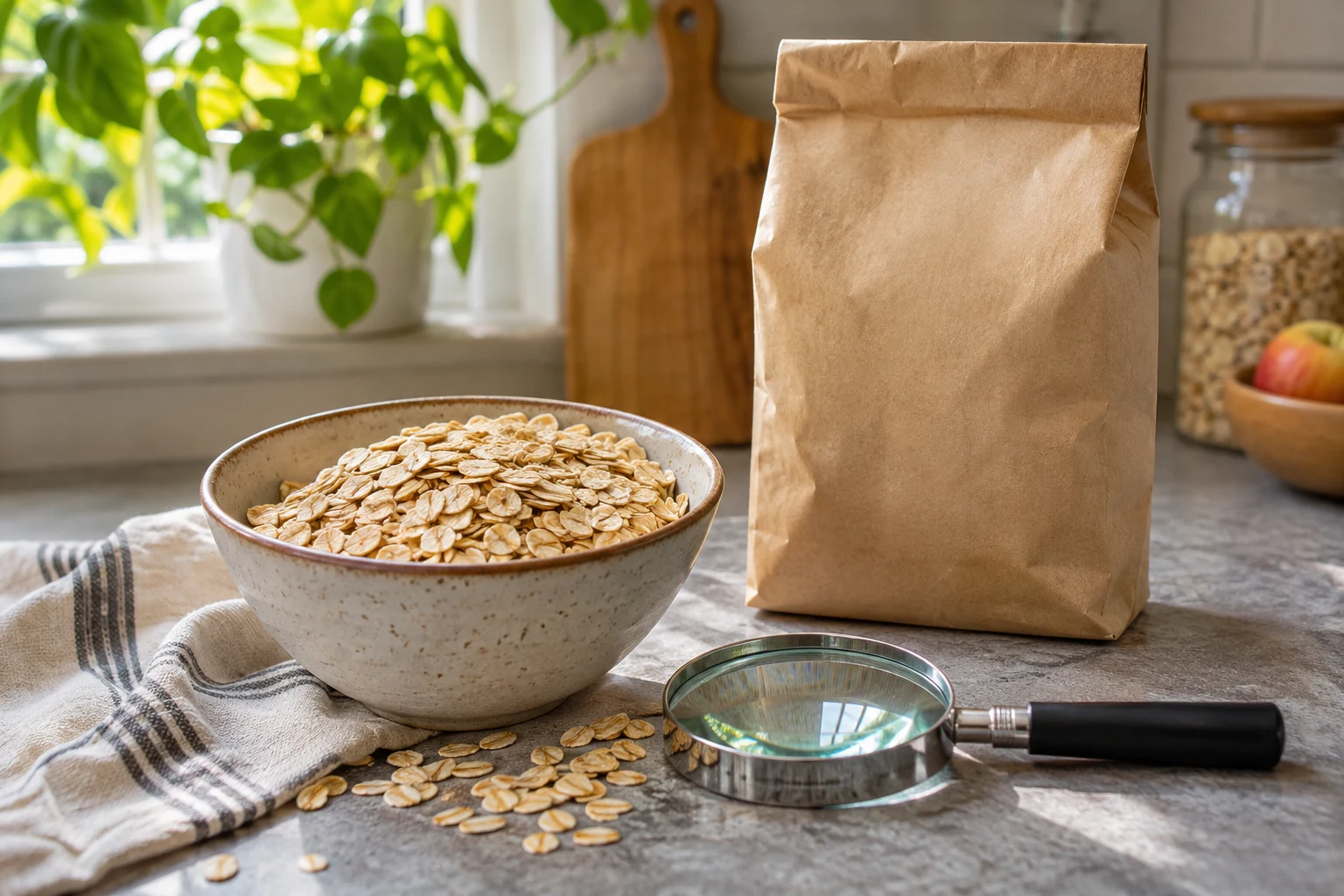
Oats do not naturally contain wheat, barley or rye gluten, but the package still matters. Oats can encounter those grains during growing, transport or processing. If you need a gluten-free diet, ordinary oats and oats carrying a gluten-free claim are not interchangeable shopping choices.
There is a second question: whether you personally tolerate oats. The Celiac Disease Foundation notes that some people with celiac disease react to oat protein even when oats are labeled gluten-free. A label cannot answer that individual clinical question.
Read the gluten-free claim on this package
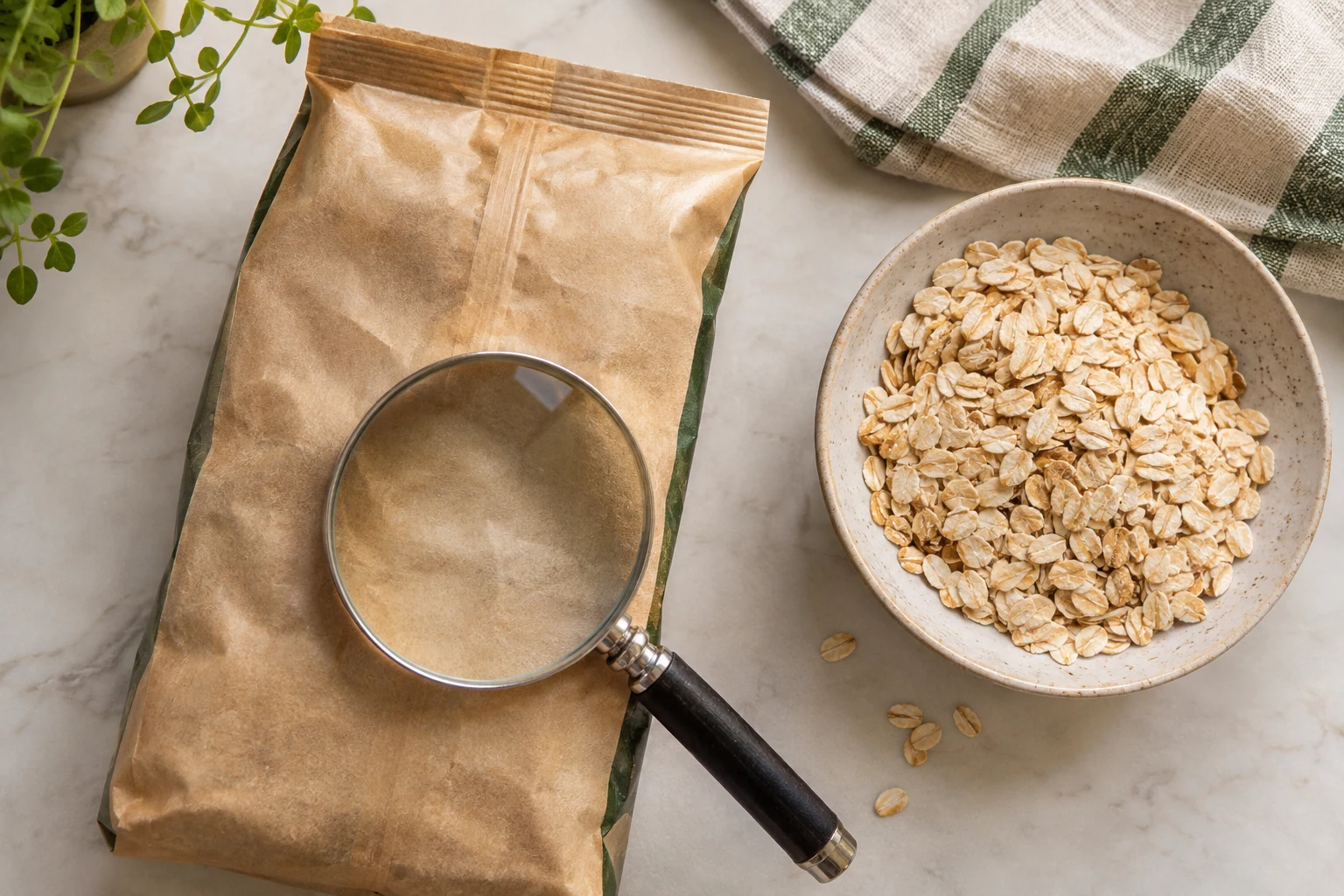
Check the actual bag, canister or finished food you are buying, rather than assuming that every product from a familiar brand has the same status. Look for an explicit gluten-free claim and read the ingredients, including flavorings and mix-ins.
FDA's US rule requires oats labeled gluten-free to contain less than 20 parts per million gluten and meet its other requirements. Third-party certification is a separate assurance system; FDA does not require certification before an oat product can carry the claim. Neither a certification logo nor the words “wheat-free” should replace reading the product information you need.
If the label is unclear, ask the manufacturer about the exact product rather than inferring its status from a similar bag. Check oat flour, granola and oat drinks separately; one suitable package does not clear all forms of oats.
Match the oat form to the recipe
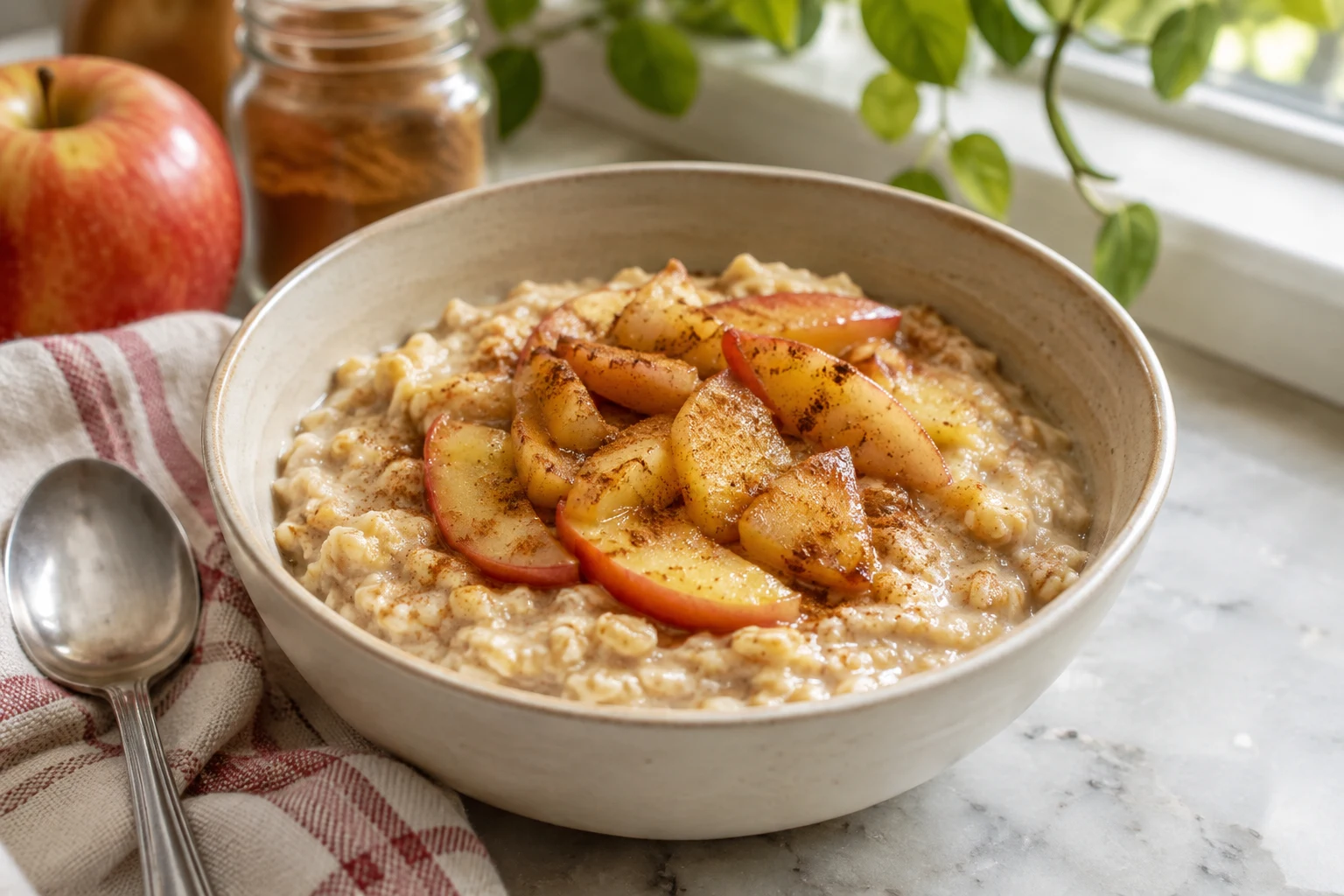
Once the product meets your dietary needs, check whether the recipe requests rolled, quick or steel-cut oats. They differ in shape and cooking behavior. A gluten-free label describes a dietary standard, not a promise that every oat product will work in the same batter.
Keep the recipe's specified quantity and cooking method. Do not replace rolled oats with steel-cut oats in a bar recipe and expect the same texture. If you need to avoid oats entirely, choose a recipe designed around a different grain rather than guessing a one-for-one substitution.
For celiac disease, discuss oat introduction or persistent symptoms with your clinician or dietitian. The practitioner guidance hosted by the Celiac Disease Foundation emphasizes individualized decisions; this article supplies no challenge schedule or dose.
Keep the prepared oats separate from crumbs
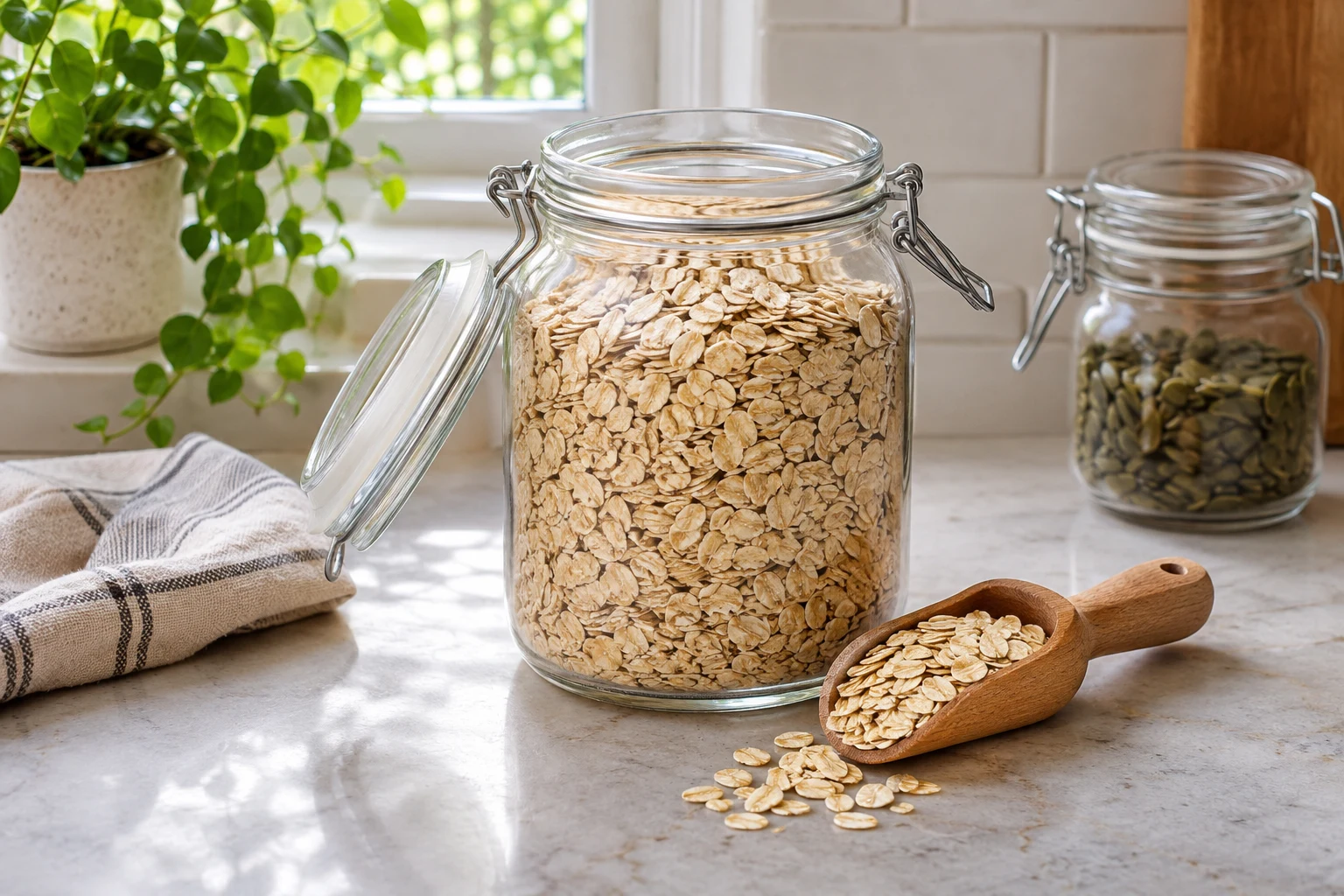
Use clean cookware, a clean work surface and a scoop that has not been in ordinary flour. Store the checked oats in their original package or a clearly identified clean container, retaining the product details. Keep shared toppings and serving utensils in the label check too.
Our cross-contact guide discusses the wider kitchen workflow. Cleaning and separation support preparation but do not turn an unsuitable ingredient into a gluten-free one.
Four recipes that specify gluten-free oats
Read each recipe's oat form and all other ingredient requirements. These links are recipe ideas, not a guarantee of individual tolerance or of a finished kitchen's cross-contact controls.
- Gluten-Free Pumpkin Spice Breakfast Bars
- Gluten-Free Maple Pecan Breakfast Porridge
- Gluten-Free Chickpea and Quinoa Breakfast Bars
- Gluten-Free Seed and Pumpkin Flour Snack Bars
Source attribution: FDA gluten-free labeling questions and answers; Celiac Disease Foundation oat resources and practitioner guidance. AI-generated editorial images illustrate shopping and preparation, without verifying a real product's label.