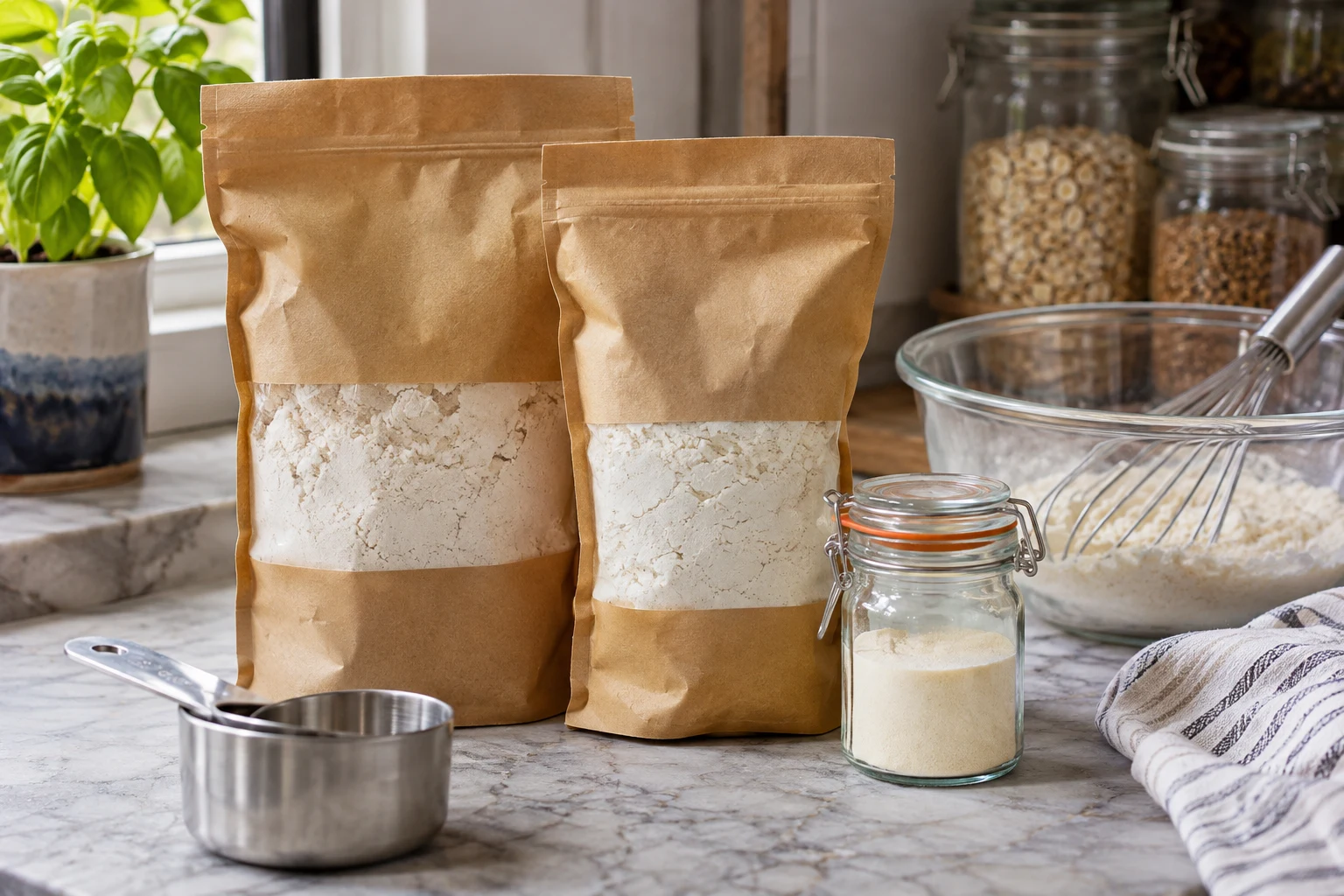
If a gluten-free flour blend already contains xanthan gum, adding another spoonful is not an automatic fix for crumbly baking. Read the blend's ingredients and the recipe together. The useful question is whether the recipe was developed for that kind of blend, including its binding ingredients.
This guide helps you choose a recipe-and-flour pairing before mixing. It does not offer a universal xanthan-gum dosage or a guarantee that a finished bake is suitable for someone with celiac disease.
Read the ingredient list, not just the front
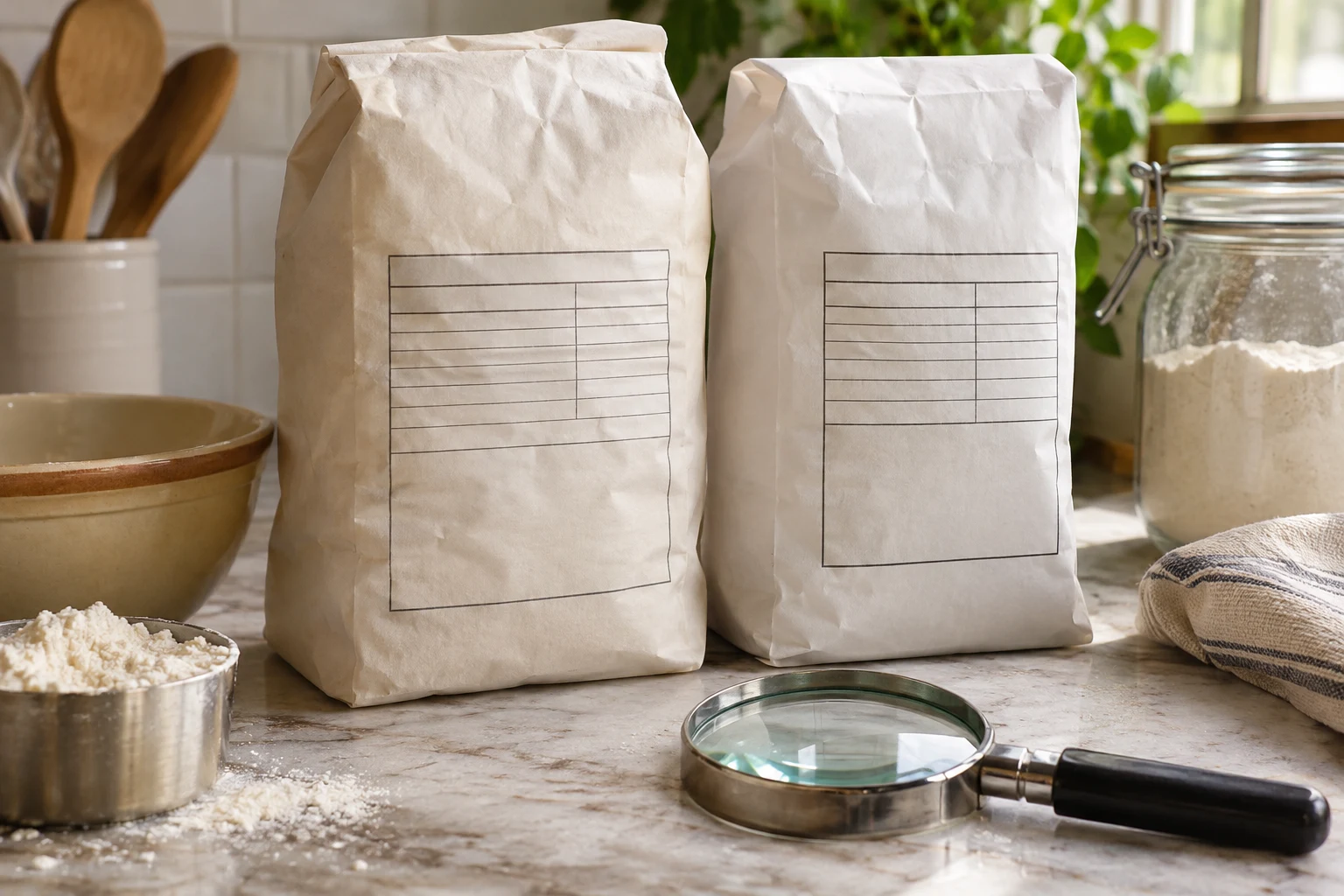
Look for xanthan gum and other binders in the complete ingredient list. Then read the product's intended uses. “Gluten-free,” “all-purpose” and “one-to-one” do not, by themselves, tell you that two products behave identically.
King Arthur Baking's xanthan-gum guidance advises checking the flour ingredients before adding more. Its gluten-free baking guide distinguishes a gum-containing replacement blend from a gum-free blend intended for recipes that supply their own binder. Follow the guidance for your actual product, not a remembered instruction for another bag.
Match the recipe’s flour description
Use this short decision sequence:
- Recipe names a particular blend: use it when possible, or check the developer's tested alternatives.
- Recipe requests a blend with xanthan gum included: confirm that wording against your bag before starting.
- Recipe requests a gum-free blend and separately measures xanthan: do not assume a gum-containing replacement blend needs the same extra amount.
- Recipe uses a single flour such as chickpea or almond flour: a general baking blend is a different ingredient, even if both are labeled gluten-free.
The Gluten Intolerance Group explains that flour blends vary and that substitution needs more thought than replacing every wheat-flour cup with any gluten-free flour. Keep yeast breads separate from non-yeasted bakes when checking replacement instructions.
If the recipe also lists xanthan gum
Look for a note such as “omit if your blend contains it.” Follow that note. If there is no explanation and your bag differs from the specified blend, ask the developer or choose a recipe written for what you have.
Do not add extra gum to an already mixed batter because its appearance seems unfamiliar. Record the blend and the amount used so you can change one variable in a later batch. A gummy, sandy or fragile result can have several causes; it does not identify a binder shortage on its own.
Check dietary suitability separately
Texture success does not establish gluten-free safety. Check current ingredient labels, including flavorings and baking powder, and prevent cross-contact from shared flour containers, utensils and work surfaces. FDA gluten-free labeling information concerns defined labeling requirements; it is not a guarantee about a recipe prepared in an uncontrolled kitchen.
For diagnosed celiac disease or wheat allergy, follow the person's clinical and household guidance. Gluten-free and wheat-free are not interchangeable instructions.
Four recipes with explicit flour-blend instructions
These recipes specify a gluten-free blend with xanthan gum included. Read each full ingredient list and method before choosing a bag:
- Gluten-Free Savory Cheese and Herb Biscuits
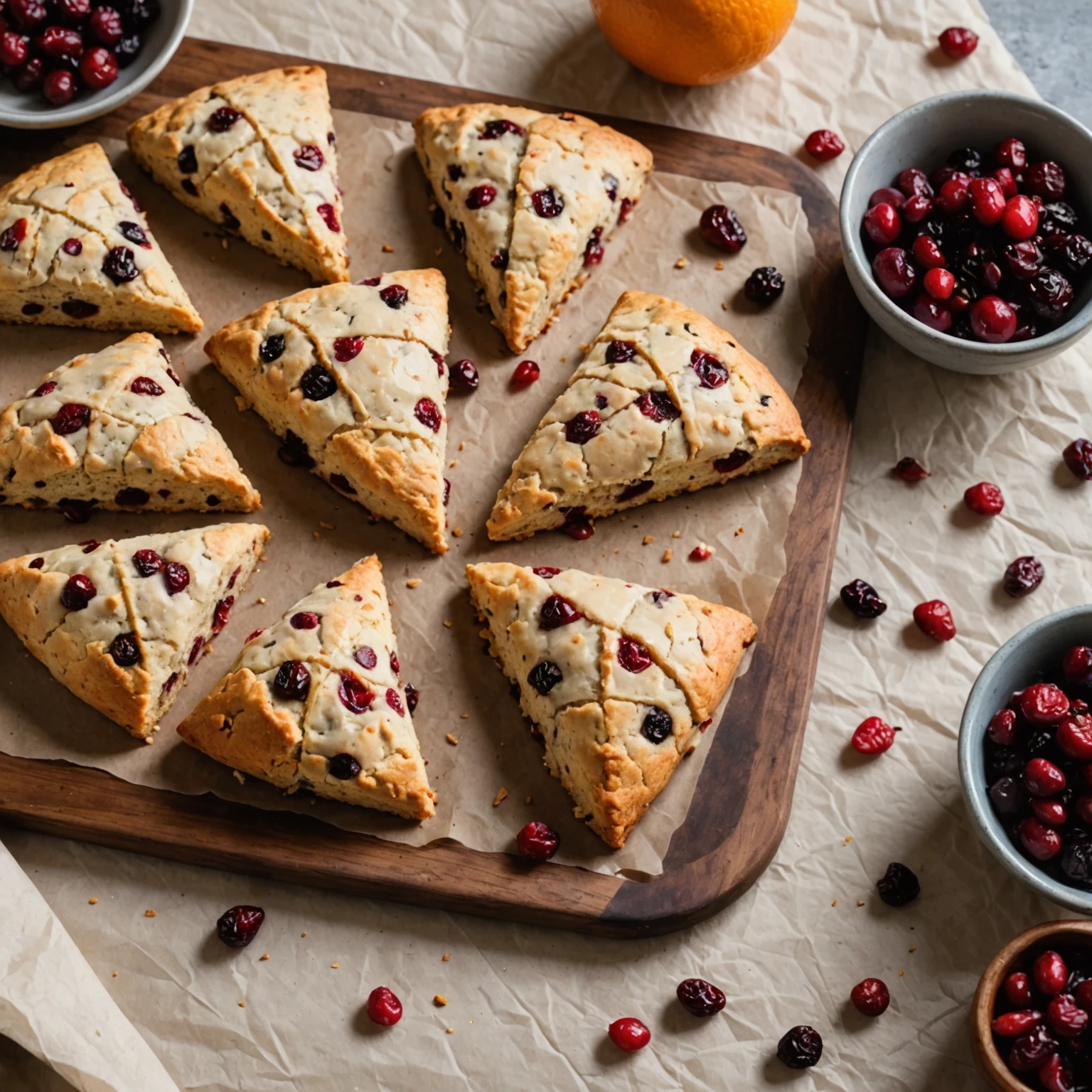
- Gluten-Free Cranberry Orange Scones
- Gluten-Free Lemon Blueberry Muffins
- Gluten-Free Holiday Cinnamon Apple Pancakes
Source notes: King Arthur Baking, Gluten Intolerance Group and FDA labeling guidance inform this guide. Physical baking tests remain deferred; images are AI-generated editorial illustrations.