
Freeflourish

Desserts

Gluten-Free Thai Mango Sticky Rice

By Freeflourish Test KitchenReviewed by Freeflourish Editorial TeamPublished Apr 7, 2026 · Updated Jun 30, 2026
Thai 45 mins glutenfreedairyfreevegetariandessertseasonaleasyfamilyfriendlyholidayclassic

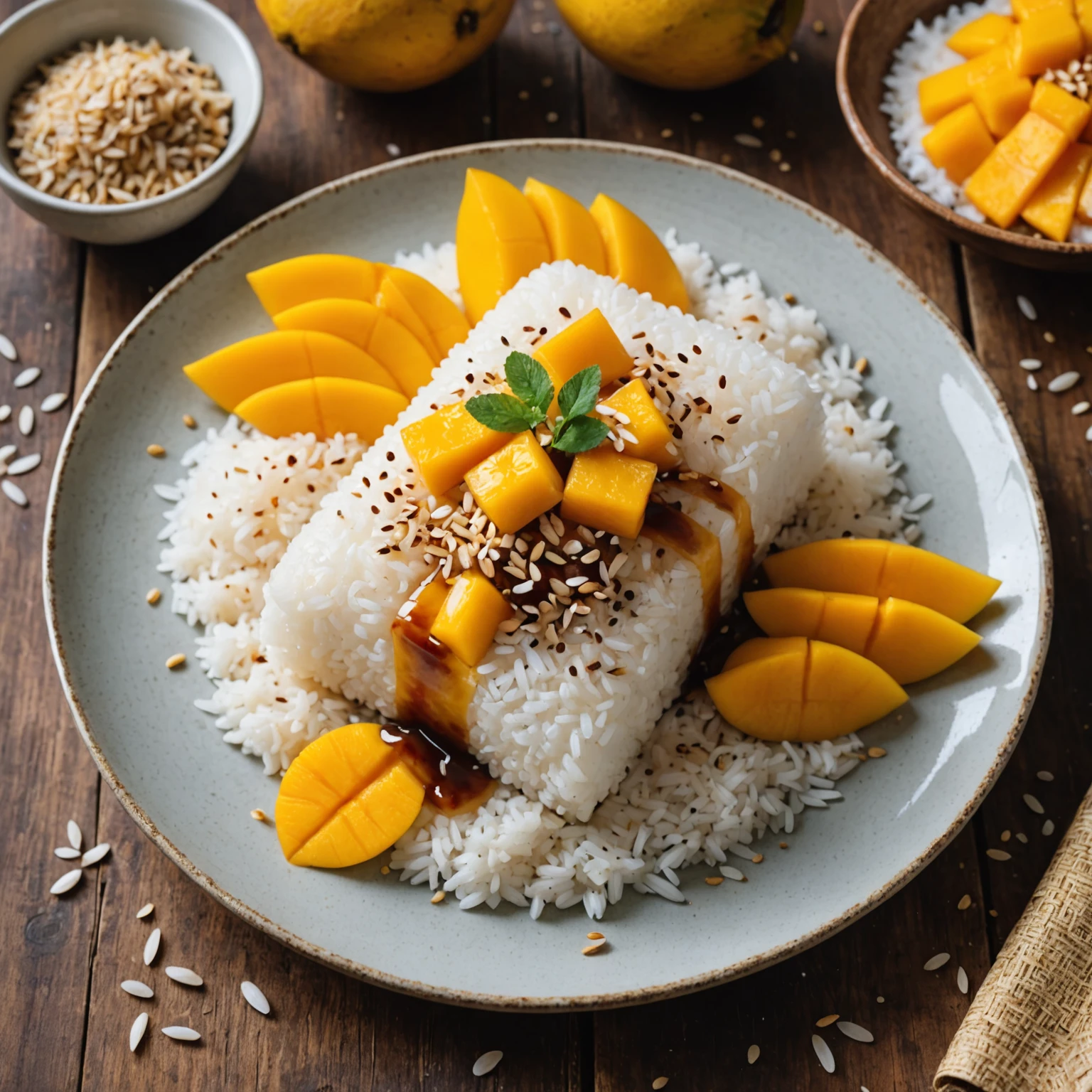
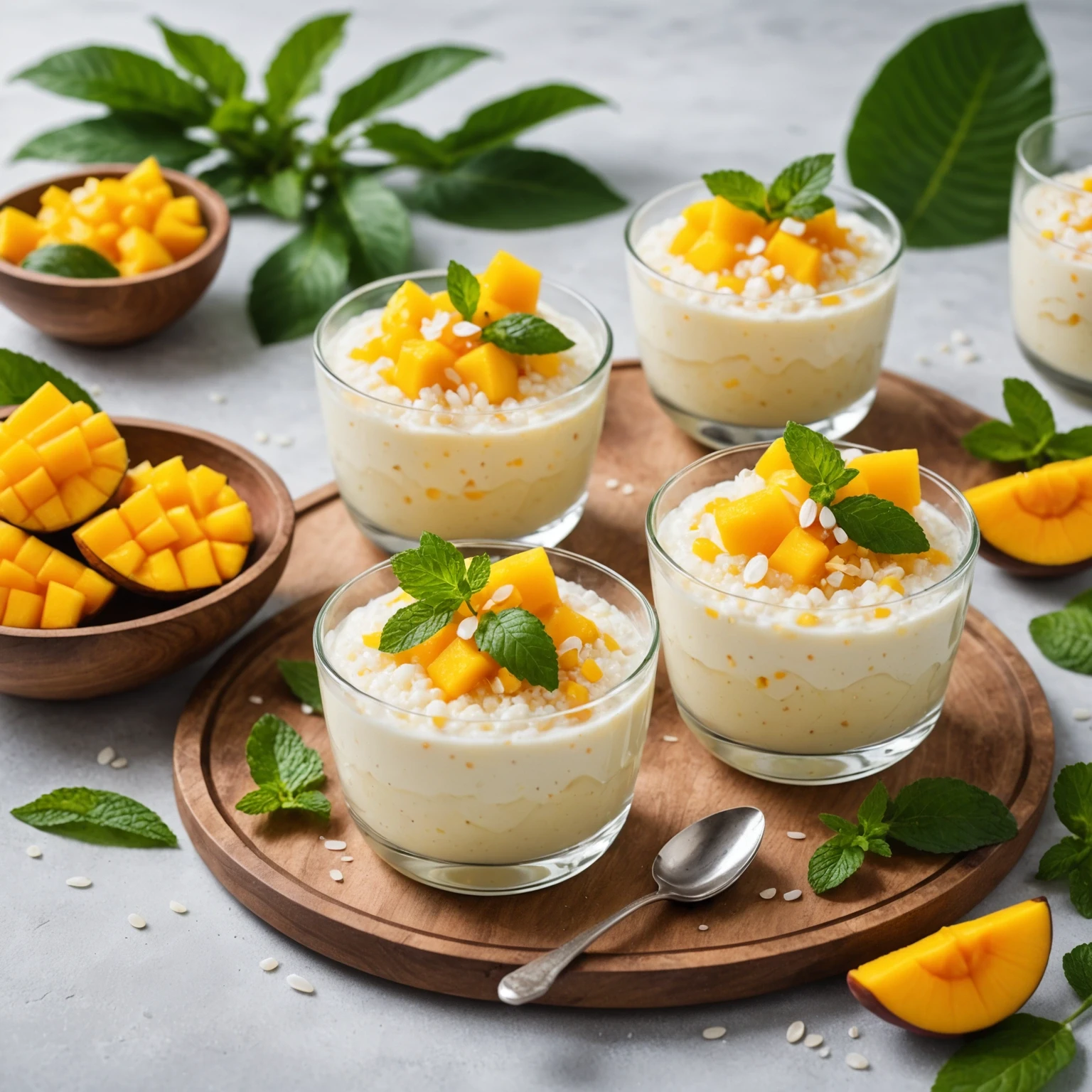
Enjoy a classic Thai dessert of sweet coconut sticky rice served with ripe mango slices. Naturally gluten-free, dairy-free, vegetarian, and an ideal family-friendly seasonal and holiday dessert.

Gluten-Free Thai Mango Sticky Rice
Prep 15 min
Cook 30 min
Total 45 min
Servings 4
Difficulty easy
Cuisine Thai

Recipe Details

Prep15 min
Cook30 min
Total45 min
Servings4
Difficultyeasy
CuisineThai
Add To Favorites

Ingredients

Servings 4
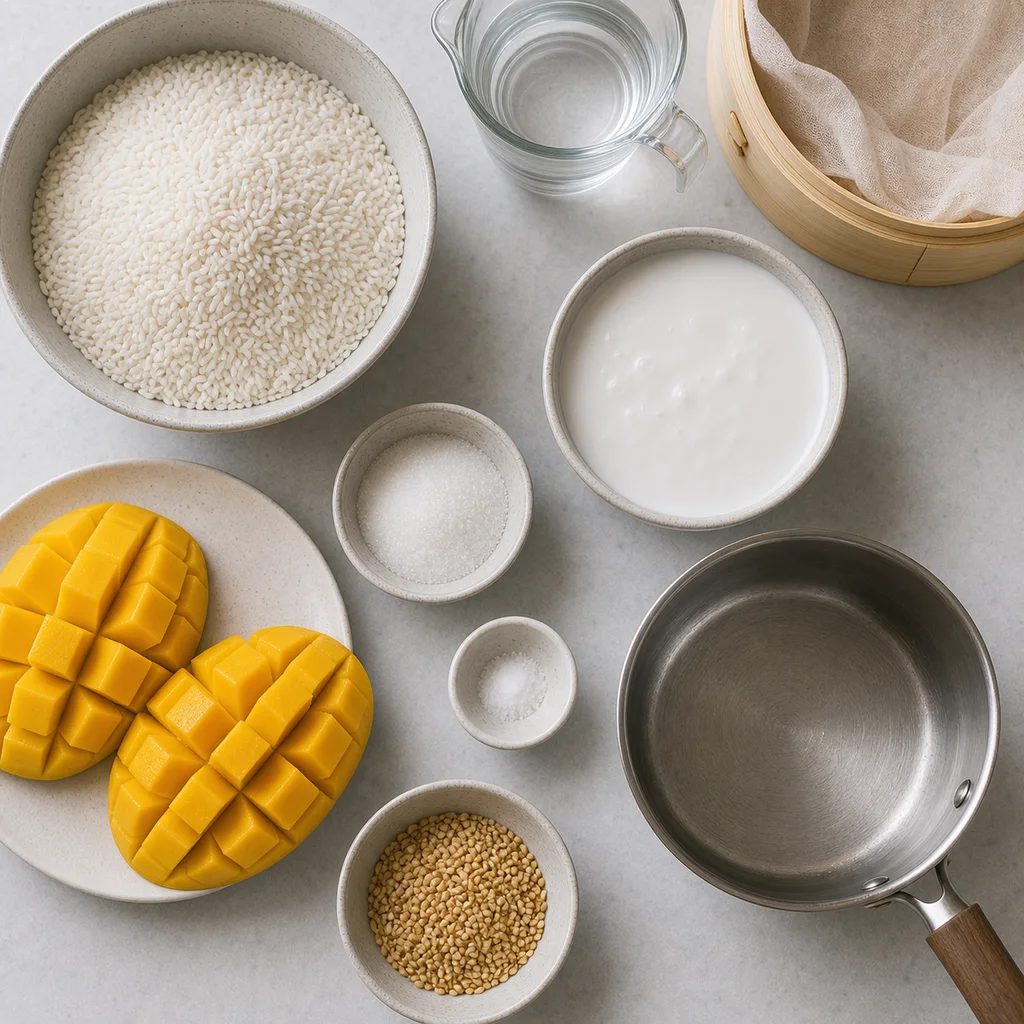
  • 1 cup glutinous (sticky) rice, rinsed thoroughly
  • 1 1/2 cups water
  • 1 1/2 cups canned coconut milk (full fat)
  • 1/2 cup granulated sugar
  • 1/4 teaspoon salt
  • 2 ripe mangoes, peeled and sliced
  • 1 tablespoon toasted sesame seeds or roasted mung beans (optional, for garnish)
Measured gluten-free ingredients for FreeFlourish Thai mango sticky rice

Instructions

  1. Rinse the sticky rice under cold water several times until the water runs clear.
  2. Soak the rinsed sticky rice in water for at least 1 hour, ideally 3-4 hours for best texture. Drain before cooking.
  3. In a medium saucepan, combine the soaked and drained sticky rice with 1 1/2 cups fresh water. Bring to a boil, reduce heat to low, cover, and simmer for 15-20 minutes until water is absorbed and rice is tender. Alternatively, steam sticky rice in a bamboo steamer lined with cheesecloth for 20-25 minutes until soft.
  4. While the rice cooks, mix the coconut milk, sugar, and salt in a separate saucepan over medium heat. Stir until sugar dissolves, warming gently until just hot but not boiling. Remove from heat.
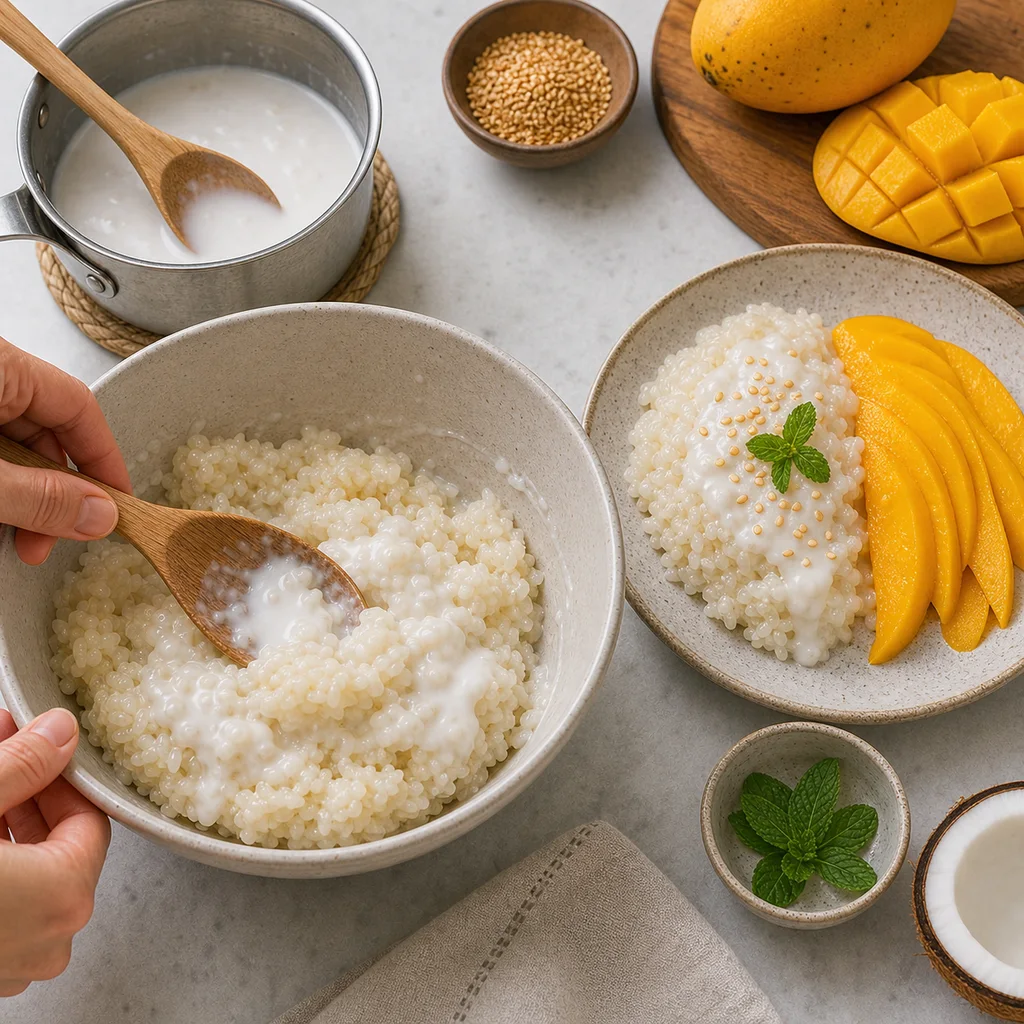
  5. Transfer cooked sticky rice to a mixing bowl. Slowly pour about two-thirds of the warm sweetened coconut milk over the rice and gently stir to combine. Cover and let the rice absorb the coconut milk for 15-20 minutes to develop a creamy texture.
  6. To serve, plate the sticky rice, arrange sliced mangoes beside it, and drizzle with remaining sweetened coconut milk.
  7. Garnish with toasted sesame seeds or roasted mung beans if desired, adding a crunchy texture and visual appeal.
  8. Enjoy immediately or allow to cool to room temperature before serving.
Sweet coconut milk folded into sticky rice beside mango slices

Tips

Allergen Overlap Note

Glutinous rice is naturally gluten-free despite the name, but check the package for wheat cross-contact statements and choose coconut milk, sesame seeds, or mung beans from trusted gluten-free sources. Use a clean steamer, saucepan, cutting board, and serving spoon if wheat desserts or baked goods are nearby.

Texture Expectations

The rice should be tender, glossy, and chewy, with grains that cling together after absorbing the sweet coconut milk. Soaking improves the classic sticky texture; if the rice seems dry, let it rest covered a little longer with the coconut mixture before serving.

Dining With Non-GF Family Note

This dessert is easy to share because the main ingredients are naturally gluten-free. Plate it with clean utensils before serving cookies, cakes, or wheat-based desserts, and keep the coconut sauce and garnish bowls separate from any gluten-containing toppings.

Frequently Asked Questions

Is glutinous rice gluten-free?
Yes. Glutinous rice is named for its sticky texture, not for gluten protein. Still, buy rice labeled gluten-free when possible to reduce cross-contact risk.
Can I make mango sticky rice ahead?
It is best fresh or at room temperature the same day. You can cook the rice a few hours ahead and keep it covered, then add fresh mango just before serving.
Why is my sticky rice hard?
It may need a longer soak or more resting time with the warm coconut milk. Cover the rice after adding the coconut mixture so the grains can soften and absorb moisture.

Ingredient Replacements

This Gluten-Free Thai Mango Sticky Rice is inherently gluten-free, dairy-free, and vegetarian, fitting many dietary preferences. To customize it further or accommodate additional dietary restrictions, consider these ingredient substitutions:

  • Coconut Milk: Use full-fat canned coconut milk for creamy richness. For a lighter option, substitute with light coconut milk or almond milk, noting the flavor will be milder.
  • Sticky Rice: Authentic recipes use glutinous sticky rice for its signature texture. For a grain-free alternative, try cooked sweet rice or sushi rice, though texture and stickiness may differ.
  • Sugar: Swap granulated sugar with pure maple syrup or coconut sugar for a more natural sweetener that complements tropical flavors.
  • Garnish: Replace toasted sesame seeds with toasted sunflower or pumpkin seeds if nut-free or allergy concerns arise, or omit garnish entirely.

These ingredient swaps maintain alignment with the recipe’s gluten-free, dairy-free, vegetarian, and family-friendly labels, allowing you to enjoy this delightful seasonal dessert with confidence and ease.

Storage and Reheating

Store sticky rice and sliced mango separately in airtight containers in the refrigerator for up to 2 days.

To reheat the rice, add a splash of coconut milk or water, cover, and warm gently in the microwave or a steamer until soft. Serve with fresh mango and garnish after reheating.

Related Articles

Read related air fryer guides and cooking tips.

More Recipes

Explore more recipes you may like.

Reviews

Rate this recipe and share a photo of your result.

No reviews yet.

Newsletter

Stay In The Loop

Get fresh recipes, articles, and updates from Freeflourish.