Breakfast
Freeflourish
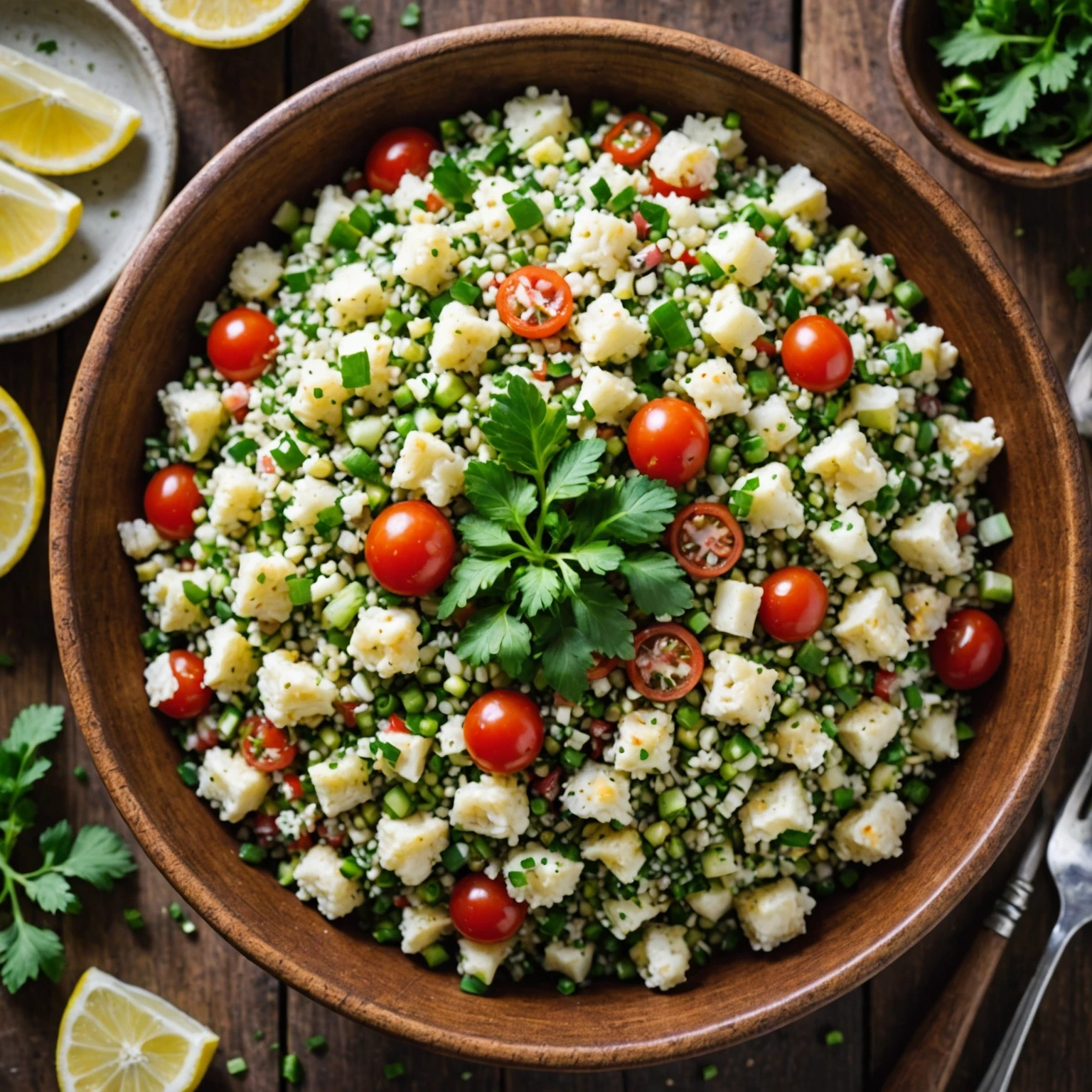
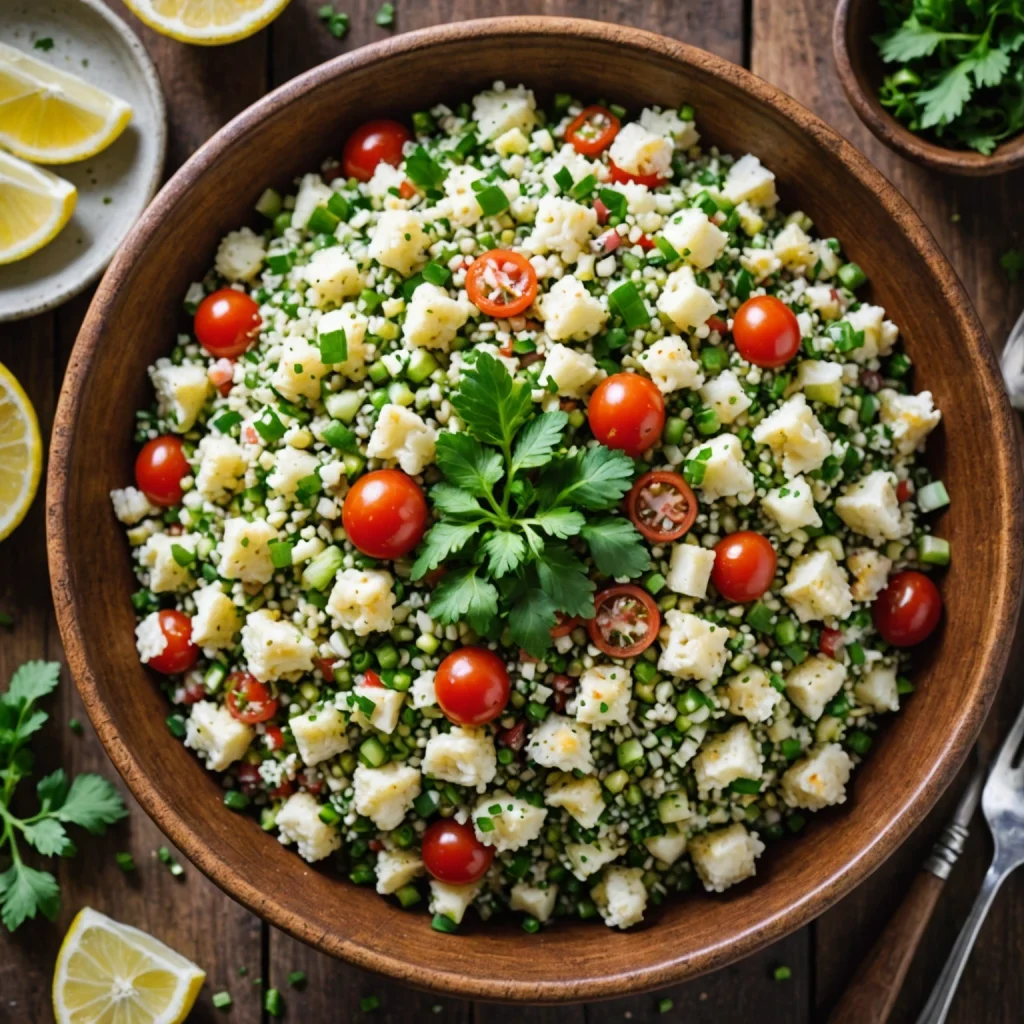
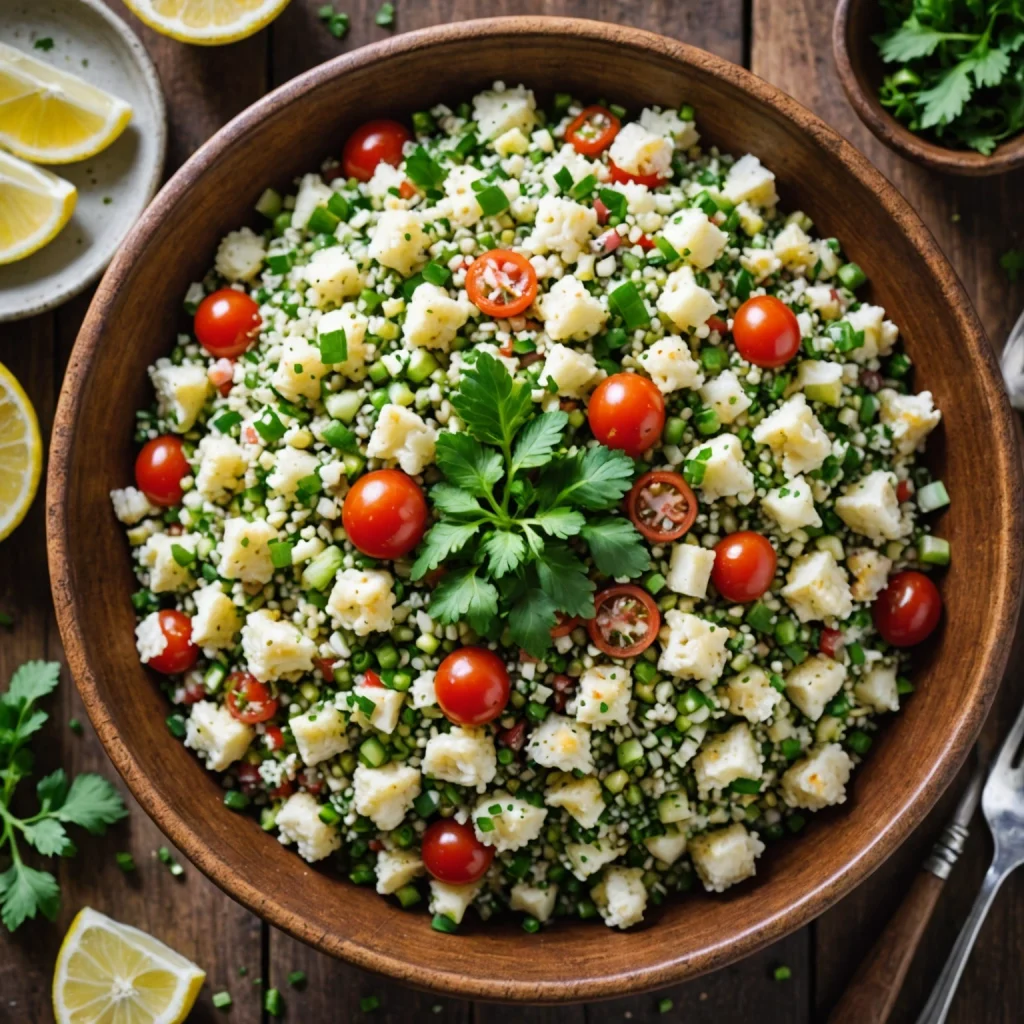
Gluten-Free Low-Carb Cauliflower Tabbouleh Salad
A vibrant, gluten-free, vegan, and low-carb cauliflower tabbouleh salad packed with fresh herbs and zesty lemon dressing. Ideal as a healthy side dish or light, family-friendly meal.
Ingredients
- 1 medium head cauliflower (about 4 cups riced)
- 1 cup fresh parsley, finely chopped
- 1/2 cup fresh mint leaves, finely chopped
- 3 medium tomatoes, diced
- 1 small cucumber, diced
- 4 green onions, thinly sliced
- 1/4 cup fresh lemon juice
- 1/4 cup extra virgin olive oil
- 1 clove garlic, minced
- Salt, to taste
- Freshly ground black pepper, to taste
Instructions
-
Remove leaves and core from the cauliflower head. Cut into chunks and pulse in a food processor until it resembles couscous-sized grains. Avoid over-processing to prevent mushiness.
-
Transfer the riced cauliflower to a large bowl. Add the finely chopped parsley, mint, diced tomatoes, cucumber, and green onions.
-
In a small bowl, whisk together the lemon juice, olive oil, and minced garlic until well combined.
-
Pour the dressing over the cauliflower mixture. Toss gently to coat evenly.
-
Season with salt and freshly ground black pepper to taste. Adjust lemon juice or olive oil if desired.
-
Let the salad rest for 10 minutes at room temperature to allow flavors to meld.
-
Serve chilled or at room temperature as a refreshing, healthy gluten-free side dish or light meal.
Frequently Asked Questions
Reader questions and answers for this recipe will appear here.
This cauliflower tabbouleh salad is naturally gluten-free, vegan, dairy-free, low-carb, and easy to prepare. Here are some ingredient swaps to accommodate preferences or availability while keeping it compliant with various diets:
- Cauliflower: While best for low-carb, gluten-free comfort, you can substitute with gluten-free quinoa or millet for a more traditional tabbouleh texture (note: these are higher carb).
- Fresh herbs (parsley and mint): Try cilantro or basil as flavorful alternatives.
- Tomatoes and cucumbers: Swap for diced red bell peppers or zucchini to suit seasonal availability.
- Lemon juice: Use lime juice for a citrus twist.
- Olive oil: Substitute with avocado oil or grapeseed oil to vary flavor profiles.
- Garlic: Garlic powder or roasted garlic can replace fresh garlic if needed.
- Green onions: Milder shallots or chives also work well here.
These substitutions retain the salad’s core gluten-free, vegan, low-carb, and easy-to-make qualities while providing flexibility.
Allergen Overlap Note
While all recipes in this gluten-free category are carefully crafted to exclude gluten-containing ingredients, potential cross-contamination risks remain. Gluten could be present due to shared processing facilities or kitchen tools. For those with celiac disease or severe gluten intolerance, it is essential to:
- Use certified gluten-free ingredients whenever available.
- Thoroughly clean all kitchen utensils, cutting boards, and surfaces before preparation.
- Be mindful of shared storage or cooking equipment that may harbor gluten residues.
Many recipes here, including this salad, are also dairy-free, nut-free, vegan, paleo, and kid-friendly; however, always verify allergen details on packaged ingredients. Careful food handling and separation maintain safe, delicious gluten-free meals for your family.
Texture Expectations
Gluten-free recipes like this Low-Carb Cauliflower Tabbouleh Salad offer delightful texture contrasts compared to traditional gluten-based dishes. The cauliflower is pulsed to mimic the light, grainy texture of couscous, providing a tender yet slightly crisp bite. Avoid over-processing the cauliflower to preserve this satisfying firm texture.
Unlike gluten-containing grains or flours, gluten-free alternatives vary widely—from crumbly baked goods to moist, dense grain-free dishes. In fresh salads and sides such as this, you'll enjoy a refreshing mix of crunchy vegetables and herbs alongside the subtly coarse cauliflower, balancing softness with crispness.
Preparing gluten-free, low-carb, vegan, and dairy-free meals relies on natural ingredient textures rather than gluten’s structural properties. Allowing the salad to rest before serving helps soften ingredients slightly while blending flavors, enhancing the overall eating experience.
By focusing on ingredient quality and preparation techniques, gluten-free recipes can deliver satisfying textures without gluten’s typical chew or stretch.
Dining With Non Gf Family Note
Enjoying meals with family members who consume gluten can be easy and inclusive while managing gluten-free needs. To avoid cross-contamination in categories like Breakfast, Lunch, Dinner, Desserts, Snacks, Soups & Salads, and especially in Gluten-Free Baking, consider these tips:
- Use separate preparation areas and tools: Designate cutting boards, utensils, toasters, and cookware exclusively for gluten-free foods.
- Store ingredients separately: Keep gluten-free flours, grains, and packaged foods in clearly labeled containers, away from gluten-containing items.
- Clean surfaces and hands carefully: Sanitize after handling gluten-containing foods and before preparing gluten-free dishes.
- Cook gluten-free meals first or at different times: Prevent airborne flour and shared oil residue contamination.
- Use dedicated serving ware and plates: Avoid placing gluten-free foods close to gluten-containing dishes.
- Communicate openly: Ensure all family members understand the importance of strict gluten avoidance for health.
- Choose family-friendly, easy recipes: Meals tagged familymeal, kidfriendly, and easy simplify accommodating both gluten-free and gluten-eating family members.
Thoughtful kitchen habits and planning help you serve safe, delicious gluten-free meals your whole family can enjoy together.
Related Articles
Read related air fryer guides and cooking tips.
More Recipes
Explore more recipes you may like.
Reviews
Rate this recipe and share a photo of your result.
No reviews yet.
Save this recipe
Log in to keep this recipe in your favorites.
Reset password Register